Scrub and exfoliants explained for smoother skin

Scrub and exfoliants explained for smoother skin
SPONSORED CONTENT
Roughly one in three people who exfoliate regularly notice tightness or redness afterwards, and it is almost always a sign of overdoing it rather than doing too little. Physical scrub and exfoliants can genuinely reshape the feel of your skin, but only when used with a light hand, and the errors that undo all that effort tend to happen right at the surface, where the results also show up first.
What scrub and exfoliants actually do
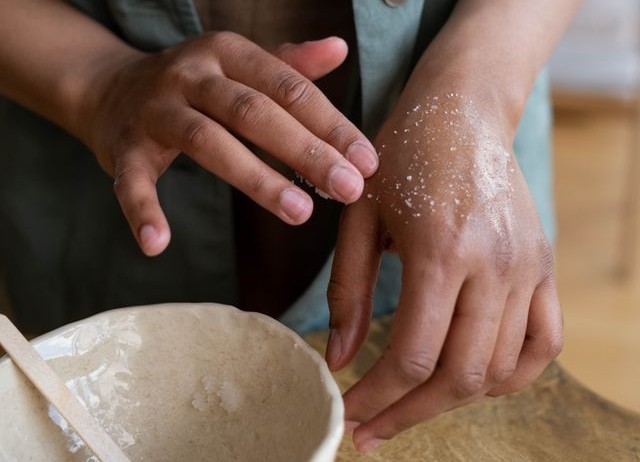
Exfoliation splits into two broad camps. Mechanical exfoliation, the kind you can actually feel, uses physical grains, sugar, salt or fine particles to lift dead cells from the very top layer of the skin. Chemical exfoliation takes a quieter route, using acids such as AHAs or BHAs to loosen the bonds between those cells so they shed on their own.
Both methods work on the same outer layer, the stratum corneum, where dullness and rough patches build up. The aim is not to scour the skin back to something rawer or cleaner. It is to give a gentle push to a process the body already runs by itself, the natural cell turnover that takes roughly 28 days in young adult skin and gradually slows with age and dehydration. Once you see it that way, the whole exercise looks different. Well-formulated scrub and exfoliants support that renewal rather than forcing it, and treating exfoliation as ordinary upkeep rather than a fix stops you reaching for it every time your skin looks a little less than perfect.
Is more exfoliation actually better?
This is where most routines quietly go off the rails. The idea that scrubbing more often leads to smoother, healthier skin feels obvious, and it is almost exactly wrong. That outer layer is not dead weight waiting to be stripped away. It is a working barrier that keeps moisture in and irritants out.
Push it too hard and you break that barrier down faster than it can rebuild, because the stratum corneum needs time to produce the new cells and lipids that hold it together. What you get is micro-inflammation, a tight film that feels squeaky clean, and skin that looks smoother for a moment while growing steadily more reactive. That squeaky-clean feeling is not a prize. It is a warning that you have stripped away too much.
Learning to read how your skin responds beats sticking to any fixed number of times a week. Keep an eye out for these signs and ease off when they show up:
- Redness or warmth that lingers an hour after exfoliating
- A tight, drawn feeling that moisturiser does not fully soften
- Fresh sensitivity to products that used to sit comfortably
- Flaking that appears soon after scrubbing rather than before it
Choosing a body scrub that respects your skin
The grain matters far more than the effort behind it. Look for rounded particles instead of jagged ones, a formula that cushions the abrasion with oils or butters, and extra ingredients that help the skin recover. In practice, jojoba beads and finely milled sugar dissolve a little as you work them in, so the scrubbing softens before it ever turns harsh, and the reason they suit reactive skin better than crushed shell or pumice is that their edges never stay sharp enough to tear at the barrier. The Beauté Pacifique approach to body care rests on barrier support and matching the product to the skin type, rather than chasing seasonal trends.
A calm routine that lasts
For most people, once or twice a week with clear rest days in between is a sensible rhythm. Those rest days are not wasted time. They are when the barrier repairs itself over the next 24 to 48 hours and the smoothing effect finally settles in. Therefore trading recovery for daily scrubbing simply unpicks the work you have just done.
The step that comes after exfoliation carries most of the payoff. Freshly exfoliated skin drinks in moisture, because clearing away the loosened surface cells leaves it far more open to whatever you apply next, so following the scrub with a rich hydrating layer, ideally within about 3 minutes while the skin is still slightly damp, seals in the improvement. This leaning toward consistency over intensity sits at the heart of the Beauté Pacifique philosophy, and over the months it serves texture far better than any fierce weekly ritual.
Smoother skin rarely comes from scrubbing harder. It comes from scrubbing smarter. Use gentle grains, pay attention to how your skin answers back, and let recovery time do half the work for you. In the end it is restraint, not frequency, that keeps texture soft.